
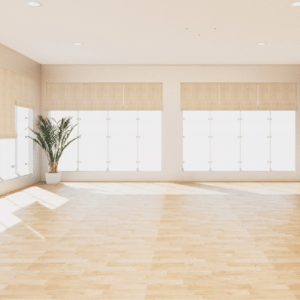
You drop the last bag at the donation center. You drive home feeling lighter, maybe even a little proud. Then you walk into the room you just cleared, and it’s quiet. Really quiet.
You expected relief, and some of it is there. But there’s something else too, something that feels a lot like an echo. The shelves are open, the corners are bare, and nothing’s asking for your attention anymore.
So the room asks you something instead.
Most decluttering advice skips this part. It treats the empty room as the finish line. I see it as the start of the real work, and that work happens inside you rather than on the shelves.
Decluttering Isn’t Organizing (And That’s the Whole Point)
Let’s clear something up first, because people mix these two up all the time.
Organizing is well-planned hoarding. You keep everything you have, give it a matching bin and a label, and file it neatly out of sight. The shelves look calmer, but you haven’t made a single decision. Nothing leaves your home, so nothing changes in your head either.
Decluttering is different. Things actually go. And when things go, they leave a gap behind.
That gap is where the road splits. You can stay with the emptiness long enough to learn something from it, which is the slow road toward minimalism. Or it gets uncomfortable, and you head to the store for storage solutions to make the space feel “finished” again. That second road leads straight back to organizing.
Neither road is about willpower. Which one you take depends on whether you’re ready for what the empty space brings up.
What Your Stuff Was Doing for You
Here’s something we don’t like to admit: our things work for us. They have jobs, and not just the obvious ones.
A full shelf can be:
- A distraction. There’s always something to look at, move or fix.
- An identity. The books say you’re well-read, and the gear says you’re adventurous.
- Company. A full room never feels empty, even when you’re alone in it.
- A volume knob. Stuff creates background noise that drowns out the thoughts you’d rather not hear.
A lot of us buy things to fill a gap we can’t quite name. The new thing arrives, the gap closes for a day or two, and then it opens again.
There’s research on this. A Tilburg University study followed more than 2,500 people over six years and found that loneliness drives materialism more than the other way around. The people who grew lonelier over time were the ones who treated their possessions as a measure of success or as a kind of “happiness medicine.”
Happiness medicine. That phrase stuck with me, because it’s exactly how a lot of us shop. We don’t buy the thing because we need it. We buy it because of what it promises to fix.
So when the things leave, their jobs go unfilled. The emptiness you feel in the cleared room isn’t new. It was there before, and the stuff was covering it.
Why It Feels Lonely (And Why That’s Not a Bad Sign)
This is where decluttering turns into something closer to a spiritual experience. It’s also where most people bail out.
Once the distractions are gone, you’re left with yourself. Your thoughts. Your questions. Maybe a few things you’ve been avoiding for years.
It can feel lonely, and I won’t pretend otherwise. But there’s an important difference between loneliness and solitude:
- Loneliness is feeling cut off and wanting something, anything, to fill the silence.
- Solitude is being alone with yourself and finding out you’re decent company.
Same empty room, same quiet. The only difference is how you relate to it.
And how you relate to it can be trained. Your brain is wired to reach for the familiar fix, whether that’s the shopping app, the scrolling or the “quick trip” to the store. Each time you sit with the quiet instead of reaching for it, you’re building a new pathway. That’s neuroplasticity, and it works the same way for a habit as it does for a skill. The more you practice, the easier it gets.
Still, it’s not supposed to be easy. If decluttering only ever felt good, everybody would do it and nobody would relapse.
The Empty Room Exercise
So what do you actually do with that quiet? You give it a structure. Not a big one, just enough to stay with it instead of running from it.
Step 1: Sit in the space
Pick one room or corner you’ve cleared. Sit there for ten minutes. No phone, no music, no “while I’m here, let me just wipe this down.” Just you and the space.
The first few minutes will feel restless. That’s normal. Let them pass.
Step 2: Ask yourself three questions
Don’t rush these. Let each one sit for a while before you move on.
- What was this space holding for me? Not literally, but emotionally. Was it holding a past version of you, a plan you never followed through on, or just noise?
- What do I reach for when it gets quiet? Be honest. The phone? The fridge? The online cart?
- Who am I when nobody’s looking at my stuff? Without the shelves telling your story, what’s actually left? What do you care about when there’s no audience to impress?
That last question is the big one. A lot of what we own is for other people: what they’ll think, how we’ll look, what we’re supposed to have by now. Strip that away, and you get a rare chance to find meaning that’s actually yours.
Step 3: Write one sentence
Not a journal entry or an essay, just one sentence. Whatever came up that felt most true. “I keep buying books I don’t read because I want to feel smart.” “I’m afraid the quiet means I’m boring.” “I actually like this.”
One sentence is enough to make it real.
Step 4: Come back tomorrow
Do it again for a week, in the same spot, with the same questions. You’ll notice the answers shift, and the restlessness at the start gets shorter. The room starts feeling less like a gap and more like breathing room.
When the Urge to Refill Shows Up
It will show up, maybe in a week or maybe in a month. You’ll be scrolling, or walking past a display, and something will whisper that the room would look so much better with this.
When that happens:
- Name it. “This is the gap talking.” Just noticing it takes away half its power.
- Ask what job it’s applying for. Is this thing going to be useful, or is it applying for the job of happiness medicine?
- Fill the gap with people or practice, not products. Call a friend. Take a walk. Pick up the hobby the clutter was blocking. The emptiness doesn’t need an object. It usually needs connection or meaning.
- Give it time. If you still want it in a week, it’s probably a real want. If not, the gap just tried to make a purchase on your behalf.
One honest note: there’s a difference between the quiet discomfort I’m describing and an emptiness that feels heavy and won’t lift. If it’s the second one, please don’t sit alone with it. Talk to someone you trust or a professional. Clearing a room can bring things up, and getting support is a strong move, not a weak one.
Solitude Is a Skill You Can Learn
I’ll say it plainly: the hardest part of decluttering isn’t letting go of things. It’s learning to be okay without them.
The cleared room isn’t empty. It’s open, and an open space is where you finally get to hear what matters to you. Not what the ads tell you, or what your neighbors have, or what you thought you were supposed to want.
Some people call that minimalism. I think of it as coming home to yourself.
The room asked you a question. You don’t have to answer it today. But don’t fill the space before you’ve heard it.
Try it tonight: pick one cleared corner, sit there for ten minutes, and ask the third question. Then come back and tell me in the comments which question was hardest for you. I read every one.