
Seneca wrote this almost two thousand years ago:
“Until we have begun to go without them, we fail to realize how unnecessary many things are. We’ve been using them not because we needed them but because we had them.”
Most people read that first sentence and nod. Sure, we own too much. But I think the second sentence is the one that hits hardest: We’ve been using them not because we needed them but because we had them.
Read it again and then look around your kitchen.
The 14-Mug Problem
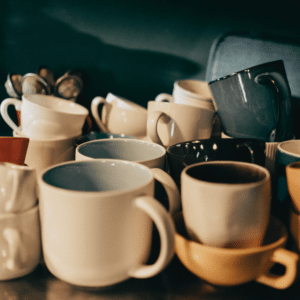
Open the cupboard. How many mugs are in there? Ten? Fourteen? Twenty?
Now think about how many you really reach for. Probably two, maybe three. There’s the favorite and the backup, plus the one that fits under the coffee maker.
The rest still get used now and then. When the favorite is in the dishwasher, you grab whatever’s in front. When guests come over, out come the souvenir mugs from that trip in 2009. That use feels like proof that you need them.
It isn’t. You used them because they were there. If they’d never been in the cupboard, you’d have washed a mug or waited ten minutes, and life would have gone on.
That’s Seneca’s point. Use doesn’t prove need. Very often it only proves that something was within reach.
How Having Turns Into Needing
Here’s what happens over time. Something comes into the house as a gift, an impulse buy or a “just in case.” It gets a spot. Because it has a spot, it gets used once in a while. Because it gets used, it starts to feel necessary.
A few years later you’d swear you can’t do without it. You never decided that, though. It just happened, slowly, while you were busy living.
You’ve probably seen this at home:
- The treadmill in the corner. It was bought for health. Now it holds clothes. It “gets used,” just not for running.
- The guest room. It hosts guests maybe twice a year. The rest of the time it holds boxes, because an empty room fills up.
- The second freezer in the garage. It’s full, so it feels needed. But it’s full because it’s there, of food you forgot you bought.
- The junk drawer. Nobody plans one. It happens because a drawer was empty and things needed somewhere to land.
None of these started as a real decision. The object came first and the habit grew around it. Then the habit started to feel like a need.
Clutter Is a Decision You Never Made
If you’ve followed this blog for a while, you know the idea I keep coming back to: clutter is deferred decisions.
Seneca adds a layer to that. Some things in your house aren’t just decisions you put off. They’re decisions you never knew were there to make. You didn’t put off deciding about the 14 mugs. You never noticed there was a decision at all, because they were already in the cupboard and part of the routine.
That’s why “Do I use this?” is a weak decluttering question. You use plenty of things simply because they’re around. Of course you’ll say yes.
You need a better question.
The Question That Changes Everything
Here it is:
“Would I buy this again today, knowing what I know now?”
Not “Did I pay a lot for it?” or “Might I need it someday?” And not “Do I use it?”
Would I buy it again today?
This question gets past the habit. It takes the item out of its comfortable spot and makes you judge it as if it were sitting on a store shelf, with you deciding whether it’s worth the money, the space and the dusting.
Some things pass right away. Your good chef’s knife? You’d buy it again tomorrow. The reading chair you sink into every evening? Without a doubt.
Many things don’t pass. You’d never walk into a store and buy eleven extra mugs. Or another treadmill, if you’re honest. You’d never pay to store food you don’t remember buying.
Those answers tell you what you actually need, as opposed to what you happen to have.
Try It: One Room, One Question
Don’t try to do the whole house. That’s how good intentions die. Do this instead:
- Pick one room. The kitchen is great for this, because it’s full of things we use only because they’re there.
- Open one cupboard, drawer or shelf at a time. Pick up each item and ask: Would I buy this again today?
- Be honest, not harsh. “Yes” is a perfectly fine answer. The point is to notice, not to punish yourself.
- Put every “no” in a box. Don’t agonize. Just box it.
- Put the box out of sight for 30 days. This is where Seneca comes in. Go without the items and see what you actually miss.
- After 30 days, open the box. Anything you went looking for goes back. Everything else goes on to someone who will use it because they need it.
Most people are surprised by how little they reach for. The mugs, the extra gadgets, the “just in case” items. A month passes and you realize the house didn’t need them. It only had them.
The Freedom on the Other Side
There’s something quietly freeing about this.
When you stop using things just because they’re there, you start choosing what’s around you on purpose. The mug you reach for is the one you love. The guest room is a room again. The freezer holds food you plan to eat.
Every object left in your home has earned its place, not because it got there first but because you’d choose it again.
Seneca didn’t tell anyone to give everything up. He asked for something harder and more useful: be honest about the difference between needing a thing and having a thing.
One cupboard is enough to start.
Open one cupboard tonight and ask the question. Then tell me in the comments what surprised you most. I read every one.